
Impacts / Landscapes
FARM & FOREST RESTORATION
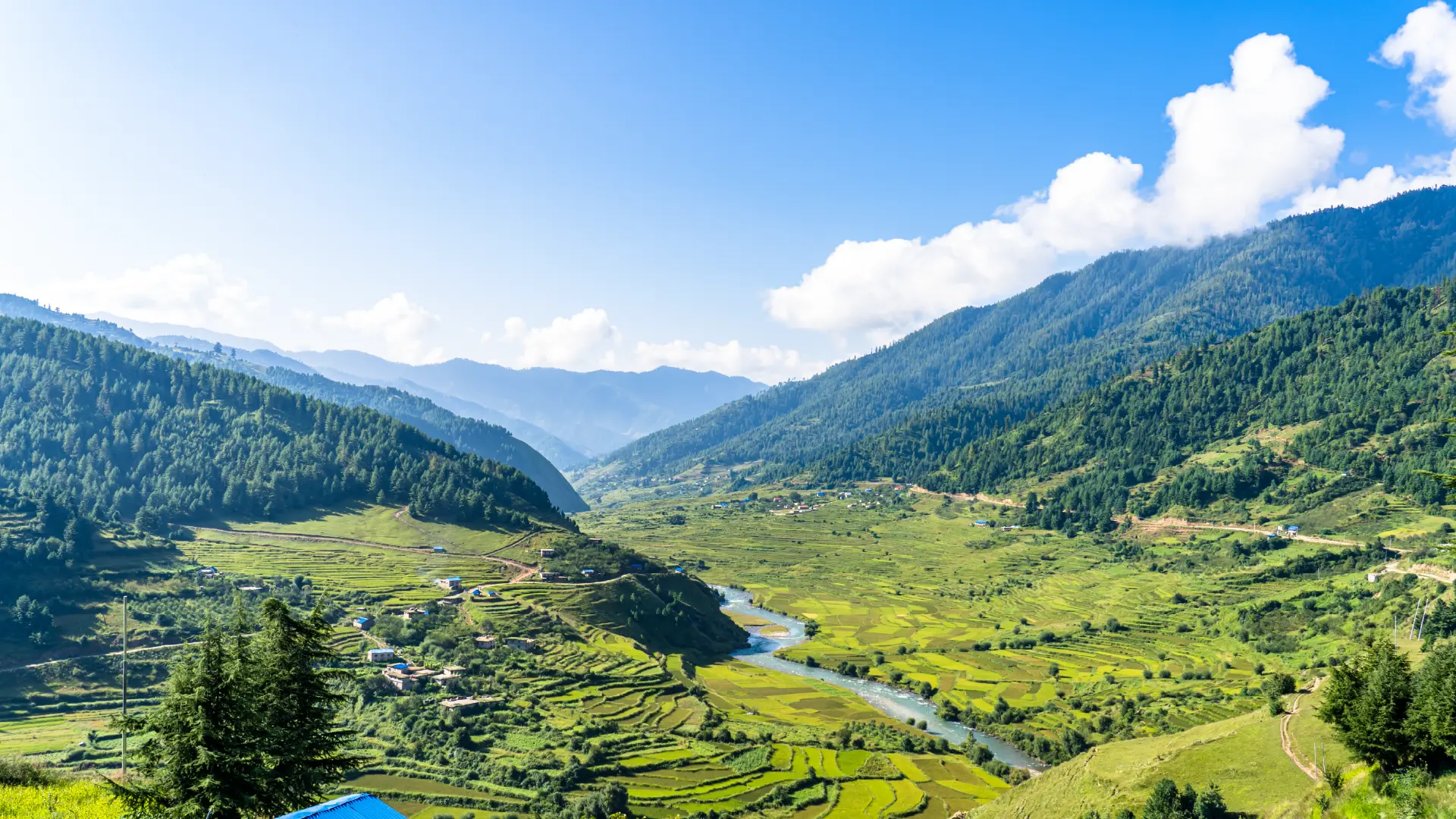
Through Mountains to Mangroves, BES and its partners aim to restore more than 10,000 hectares of degraded forests and farmlands by 2030—strengthening rural incomes, biodiversity, and climate resilience.
Our Goal
PUTTING LAND BACK TO PRODUCTIVE USE
Working with communities, BES is transforming fallow arable land into ecologically and economically productive landscapes. High-value native trees and crops can create income, strengthen community carbon banks, recover biodiversity, and improve resilience to climate change.
Over the decade, the program is working toward cultivating tree crops on at least ten percent of Bhutan's fallow arable land, while helping local nurseries and rural households participate in the restoration economy.
Land Use Data
FALLOW ARABLE LAND BY DZONGKHAG
Roughly 29 percent of Bhutan's arable dryland sits fallow. The distribution below, by dzongkhag, shows where restoration has the most ground to cover.
Hectares
Arable Dryland Left Fallow
Forest Integrity
FUNCTIONAL, CONNECTED FOREST LANDSCAPES
Forests cover roughly 71 percent of Bhutan, while protected areas and biological corridors account for about 51 percent of the country. BES collaborates with agencies and communities to review forest performance, support responsible management, and protect the ecological integrity of these large landscapes.
Selected Work