
Launched today, Restore Bhutan – led by the Royal Government of Bhutan with Conservation International, the Bhutan Trust Fund for Environmental Conservation, and the Bhutan Ecological Society – will restore 50,000 hectares of land over the next decade to boost climate resilience, biodiversity, and community livelihoods.
Bhutan, 28 November 2025 – Today, in the presence of Her Royal Highness Princess Chimi Yangzom Wangchuck, an innovative nature restoration roadmap was launched – Restore Bhutan. Restore Bhutan provides a clear pathway to revive 50,000 hectares of degraded landscapes, including forests, farmlands, and urban lands across Bhutan over the next decade with the potential to remove at least 1.96 million tons CO2 equivalent valued at over USD100 million.
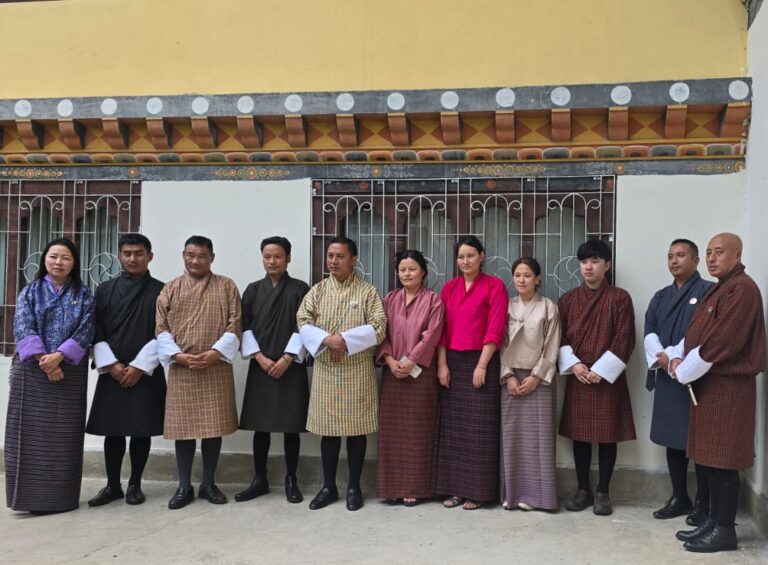
A Memorandum of Understanding was signed today between the Ministry of Energy and Natural Resources, Royal Government of Bhutan; Conservation International; Bhutan Trust Fund for Environmental Conservation; and Bhutan Ecological Society, as announced in August 2025, to scale nature restoration across Bhutan. The partners gathered for the inaugural Project Steering Committee which will guide the collaboration.
“Bhutan’s forests are the foundation of our nation’s well-being – regulating climate, safeguarding water, and sustaining livelihoods – while reflecting our deep cultural bond with nature. Through the Restore Bhutan partnership, we aim to strengthen this legacy and ensure our landscapes continue to benefit Bhutan and the world for generations to come. Restore Bhutan will support our constitutional mandate to maintain at least 60% forest cover and uphold our carbon-neutral status, while advancing global goals for climate resilience, biodiversity conservation, and sustainable development,” said Mr. Karma Tshering, Secretary, Ministry of Energy and Natural Resources, Royal Government of Bhutan.
“To help sustain Bhutan’s extraordinary commitments to nature and climate, Restore Bhutan will deliver the scale needed to create new livelihood opportunities for Bhutan’s next generation in restorative forestry and regenerative agriculture, all to enhance the vitality of Bhutan’s working lands for people and nature. To realize this nationwide restoration plan, the partnership will unlock stacked philanthropic, public, and private capital along with financing for water replenishment, biodiversity, and investment in small businesses.” said Dr. Richard Jeo, Chief Field Officer Asia, Conservation International.
Located in the Eastern Himalayan biodiversity hotspot, Bhutan boasts high forest cover and is a global leader in protecting natural ecosystems. Yet these forests face a mix of ecological, climatic, and human pressures that could erode both biodiversity and the country’s carbon‑negative status. The main threats are not the typical large-scale deforestation but instead forests with high fire risk and agricultural lands left fallow, issues exacerbated by climate change, and localized degradation from human use.
The initiative will focus on three key restoration pathways:
- Revive Vital Forests: Targeting ~28,000 hectares of fire-impacted and low-tree cover lands to enhance carbon sequestration, biodiversity, and economic value while mitigating forest fire risks.
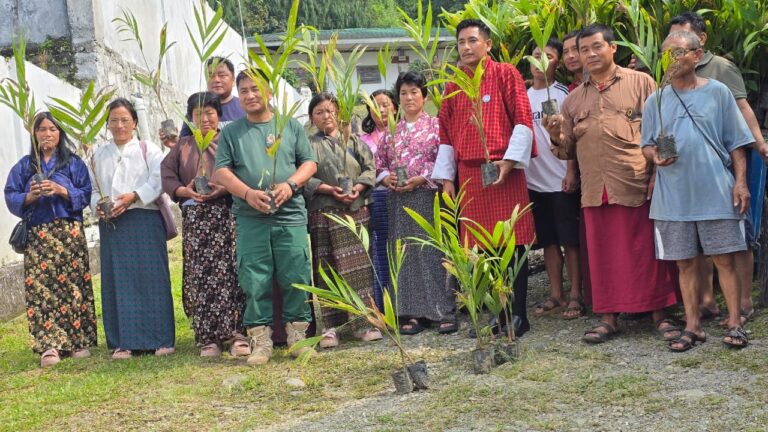
- Regenerate Farmlands: Revitalizing ~21,000 hectares of fallow agricultural drylands through regenerative practices, including agroforestry and improved fallow management, boosting productivity and supporting smallholder farmers.
- Restore Urban Resilience: Restoring ~1,000 hectares of urban lands to provide urban heat protection, flood mitigation, and community livelihoods, engaging schools and monastic institutions in green plantations.
“Restore Bhutan strengthens the country’s long-standing commitment to environmental stewardship”, said Dr. Karma Tshering, Managing Director of the Bhutan Trust Fund for Environmental Conservation. “As the world’s first environmental trust fund, we see this initiative as a natural extension of Bhutan’s leadership as a carbon-negative nation and its ambitions under the Paris Agreement. It complements national programs such as Bhutan for Life, while advancing our shared priorities for climate resilience, biodiversity protection, and sustainable development.”
“Restore Bhutan is a great example of what happens when we bring our strengths together. Communities know their land, and science helps us understand how to restore it for the long run”, said Dr. Nawang Norbu, Executive Director of the Bhutan Ecological Society. “When we work side by side like this, we can rebuild healthy landscapes that support families today and protect Bhutan’s environment for the future.”
ENDS —
About Conservation International: Conservation International protects nature for the benefit of humanity. Through science, policy, fieldwork and finance, we spotlight and secure the most important places in nature for the climate, for biodiversity and for people. With offices in 30 countries and projects in more than 100 countries, Conservation International partners with governments, companies, civil society, Indigenous peoples and local communities to help people and nature thrive together. Go to Conservation.org for more, and follow our work on ConservationNews, Facebook, Twitter, TikTok, Instagram, LinkedIn and YouTube.
About Mountains to Mangroves: Mountains to Mangroves is an ambitious partnership, led by the people of the Eastern Himalayas and catalyzed by Conservation International, to protect and restore the connected ecosystems of Bhutan, Bangladesh, India, and Nepal in response to the shared challenges to climate change and biodiversity loss. The initiative seeks to mobilize transformative capital from public, private, and philanthropic funding to scale forest restoration through nature-based solutions and innovative finance. Together, the partners aim to plant one billion trees and restore one million hectares of land—from the mountains to mangroves. This living corridor supports 12% of the planet’s biodiversity and sustains the lives and livelihoods of more than one billion people. Visit Conservation.org/mountains_to_mangroves to learn more.
About Bhutan Ecological Society: Bhutan Ecological Society is a nonprofit organization that connects science, business and policy, with the goal of building and sustaining resilient communities and functional landscapes. BES aims to create and sustain functional physical environments (built and natural) that provide for human needs and foster prosperity, while ensuring the integrity of ecosystems.
About Bhutan Trust Fund for Environmental Conservation: Established in 1991, the Bhutan Trust Fund for Environmental Conservation is the world’s first environmental trust fund. It was founded as a collaborative venture between the Royal Government of Bhutan, the United Nations Development Programme, and the World Wildlife Fund. The trust fund’s capital grew from US$21.3 million in 1992–1997 to over US$86.3 million by 2025. Its initial endowment was supported by the World Wildlife Fund, the Global Environment Facility, and the governments of Bhutan, Denmark, Finland, the Netherlands, Norway, and Switzerland. To date, BTF has granted about US$54.8 million across more than 286 conservation projects. BTF is also the only accredited entity in Bhutan to the Green Climate Fund and the Adaptation Fund.